Practised primarily in the northern districts of Kerala, especially Kannur and Kasaragod and parts of the Vadakara region, Theyyam brings together ritual, dance, music, oral history, mythology, costume, painting, community memory, and local traditions.
The word Theyyam is widely believed to be connected to the Malayalam word Daivam, meaning “deity” or “divine being.” In Theyyam, the divine is not represented only through an idol inside a temple. Traditionally, the performer becomes the ritual embodiment of a deity, creating a powerful connection between human beings, community, sacred space, and the divine.
? 1. Origins — Roots in Ancient Local Traditions
The origins of Theyyam are complex and cannot be attributed to a single historical source. Scholars generally understand it as a tradition shaped by ancient local beliefs, nature worship, ancestor traditions, hero worship, and later Hindu religious influences.
Sacred groves (kavus), forests, trees, serpents, fire, water, and other elements of nature occupy an important place in many Theyyam traditions.
Several communities, including Vannan and Malayan communities, have historically preserved and performed particular Theyyam traditions from generation to generation.
The result is a remarkable cultural system in which ritual, oral tradition, music, dance, visual art, and collective memory remain interconnected.
Theyyam is not simply a dance. It is a living cultural tradition through which communities preserve their stories, beliefs, memories, and relationship with the sacred.
? 2. Rituals — When the Divine Appears Through the Human Body
Theyyam performances are traditionally conducted in sacred groves, temple compounds, ancestral properties, and other ritual spaces.
The exact ceremonies differ according to the deity, locality, and community, but several important elements commonly appear.
Thottam Pattu
The performance often begins with Thottam Pattu, an oral song tradition that narrates the origin, history, and characteristics of the deity.
Costume and Face Painting
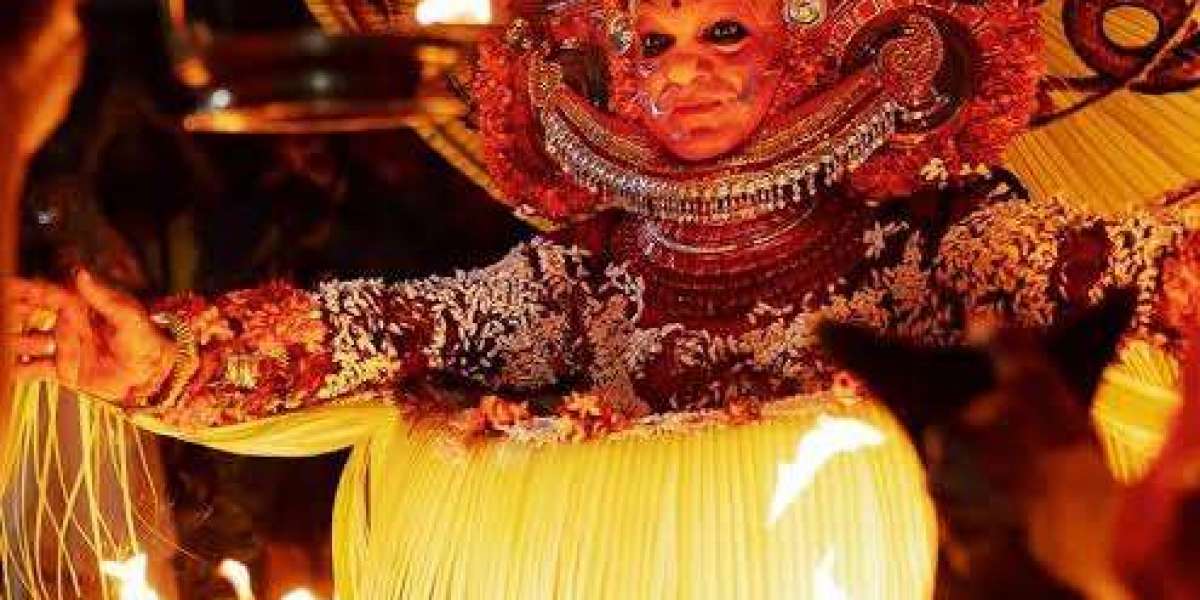
The performer is transformed through elaborate face painting, costumes, ornaments, headgear, body decoration, and other ritual elements.
Ritual Entrance
The performer enters the sacred space through a prescribed sequence of rituals, gradually assuming the visual and symbolic identity of the deity.
Divine Possession
According to traditional belief, the performer enters a state in which the presence or power of the deity is manifested through the performer.
Dance and Oracle
The performance combines powerful movements, percussion, ritual gestures, and interaction with devotees. In many traditions, the Theyyam also serves as an oracle, responding to people and offering blessings or guidance.
Thus, Theyyam creates a remarkable moment in which the human performer becomes the ritual medium through which the community experiences the divine.
? 3. Social Significance — More Than a Religious Performance
Theyyam also has an important social dimension.
Historically, many Theyyam traditions were preserved and performed by communities that occupied relatively lower positions within Kerala's traditional social hierarchy. During the ritual, however, the performer representing the deity could occupy an exceptionally respected position.
People from different social backgrounds could approach the Theyyam for blessings and guidance.
This has led scholars to examine Theyyam in relation to social hierarchy, authority, community identity, resistance, and cultural memory.
However, Theyyam should not be reduced to a simple story of social equality. Its history contains complex relationships between ritual authority, caste, community, religion, and local power structures.
That complexity is precisely what makes Theyyam an important subject for understanding Kerala's social history.
? 4. The Extraordinary Diversity of Theyyam
There is no single form of Theyyam.
There are hundreds of Theyyam traditions and regional variations, each associated with particular stories, communities, sacred spaces, and ritual practices.
| Type / Tradition | Examples | Main Characteristics |
|---|---|---|
| Nature-associated traditions | Serpent and tree-related forms | Connections with nature and sacred landscapes |
| Protective deities | Various guardian forms | Protection of communities and sacred spaces |
| Hero traditions | Various heroic Theyyams | Memories of legendary or historical figures |
| Mythological traditions | Kali, Chamundi and related forms | Connections with wider Hindu mythology |
| Local ancestral traditions | Regional deity traditions | Community-specific histories and beliefs |
A Theyyam's story, costume, facial design, songs, movements, rituals, and musical patterns can vary significantly from one locality to another.
? 5. The Art of Theyyam — Costume, Colour and Transformation
One of the most striking features of Theyyam is its extraordinary visual language.
The elaborate headpieces, facial designs, body painting, costumes, ornaments, and colours are not merely decorative.
They help communicate the identity and character of the deity being represented.
The preparation of these elements also preserves generations of traditional craftsmanship and artistic knowledge.
For photographers, artists, anthropologists, and cultural historians, Theyyam provides an extraordinary example of how ritual and visual art can become one.
? 6. Music and Dance
Music is fundamental to the Theyyam experience.
Traditional percussion instruments, particularly the chenda, together with other instruments and vocal traditions, establish the rhythm of the ritual.
As the performance develops, the interaction between:
- Percussion
- Singing
- Movement
- Costume
- Facial expression
- Fire and light
- Sacred space
- Audience participation
creates an intensely immersive experience.
Theyyam can therefore be understood simultaneously as ritual, dance, theatre, music, storytelling, and visual art.
? 7. Cultural and Economic Importance
Theyyam is deeply connected to the local economy and cultural life of northern Kerala.
The tradition supports or contributes to the livelihoods of people involved in:
- Costume making
- Face painting
- Traditional music
- Singing
- Craft production
- Ritual preparation
- Local hospitality
- Cultural tourism
Theyyam has also become an important attraction for visitors from other parts of India and from around the world.
At the same time, responsible cultural tourism should recognise that Theyyam is a living religious and community tradition, not merely a performance created for tourists.
Respect for the communities who preserve the tradition is therefore essential.
? 8. Theyyam in the Modern World
Today, Theyyam is attracting international attention through documentary films, photography, academic research, cultural festivals, digital media, and tourism.
Yet its importance goes beyond its spectacular appearance.
Behind the elaborate costumes and dramatic performances lies a much deeper cultural system involving:
community memory → oral history → sacred landscapes → traditional craftsmanship → ritual knowledge → social identity.
The challenge for the modern world is to appreciate Theyyam without turning it into a mere exotic spectacle.
Its greatest value may lie in understanding how a community can preserve its history, identity, spirituality, art, and collective memory across generations.
? Conclusion
Theyyam is much more than a traditional dance of Kerala.
It is a living cultural heritage in which ritual, music, mythology, history, visual art, nature, community identity, and spiritual experience come together.
In the sacred spaces of northern Kerala, the beat of the drums, the extraordinary face painting, the towering headgear, the ancient songs, and the movements of the performer create an experience unlike almost anything else in the world.
To watch Theyyam is therefore not simply to watch a dance.
It is to witness a living culture — a tradition in which a community continues to remember, perform, and reinterpret its relationship with the sacred.