
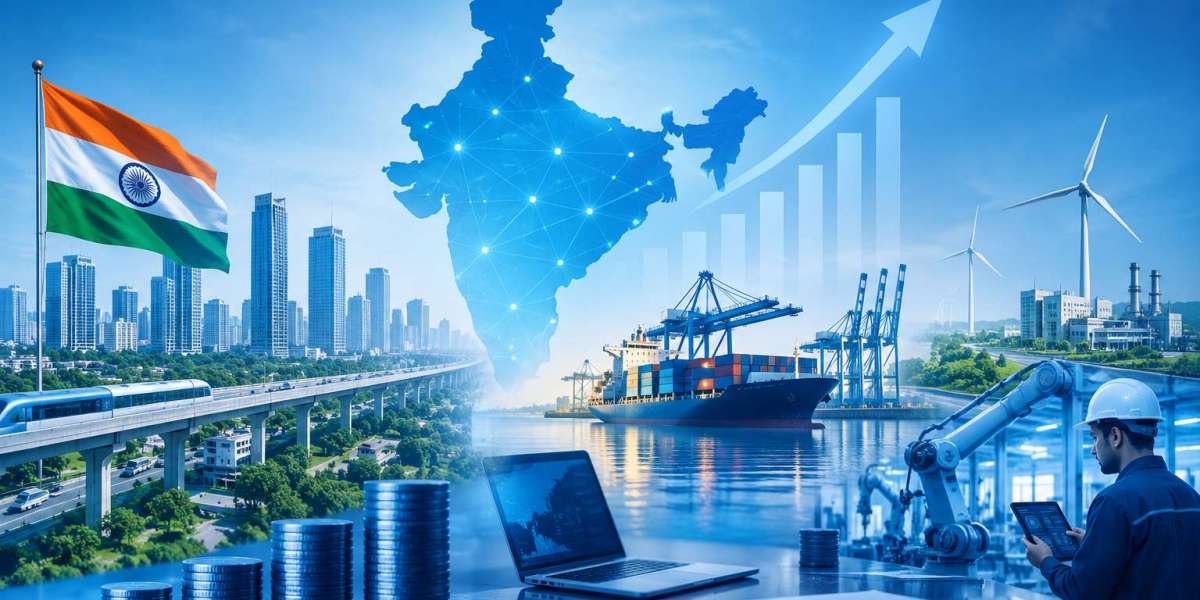
From an economy once heavily controlled by the state, India has gradually developed into one of the world's major growth centres, supported by a large domestic market, expanding infrastructure, digital technology and a young workforce.
One of India's most important strengths is its scale. A large population creates both a challenge and an enormous economic opportunity. Millions of consumers, entrepreneurs, workers and small businesses participate in the economy every day.
The expansion of digital infrastructure has also changed the way Indians interact with financial services, commerce and government systems. Digital payments, online banking, e-commerce and digital public infrastructure have reduced barriers for many businesses and consumers.
However, economic growth cannot be measured only through GDP. The quality of employment, productivity, education, healthcare, infrastructure and income distribution also determine whether growth creates broad prosperity.
India's next challenge is therefore to convert its demographic scale into productive economic capacity.
Manufacturing is one major opportunity. India can strengthen its position in global supply chains by improving logistics, industrial infrastructure, skill development and the ease of doing business. At the same time, services, technology, tourism, creative industries and knowledge-based businesses can continue to expand.
Small and medium enterprises will be particularly important. They generate employment and connect economic growth to local communities. Better access to finance, technology, markets and skilled workers can help them grow into larger enterprises.
Education and skill development may ultimately be even more important. A growing workforce becomes an economic advantage only when people have the skills required by emerging industries.
India must also invest in research, innovation and advanced technologies. Artificial intelligence, biotechnology, renewable energy, semiconductor manufacturing and space technology could become important components of the next stage of growth.
The future Indian economic model should therefore combine growth with productivity, innovation with inclusion, and technology with human development.
India has already demonstrated that large-scale transformation is possible. The next question is not simply how fast the economy can grow, but how effectively that growth can create opportunities for people across different regions and economic backgrounds.
The next phase will require long-term thinking, stronger institutions, skilled people, innovative businesses and sustained investment.