
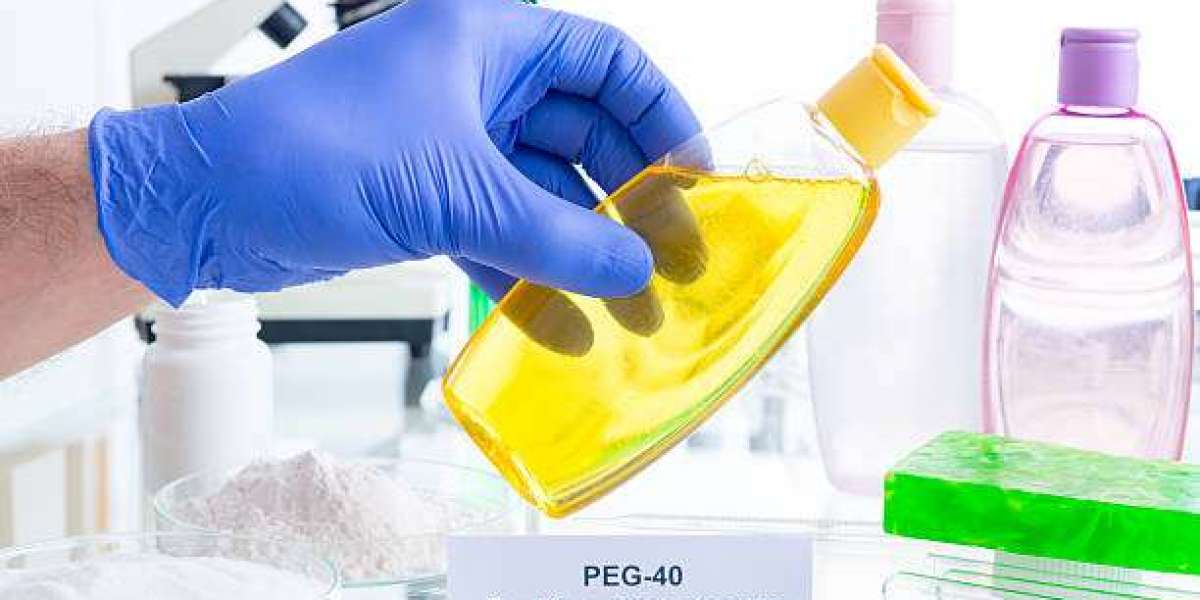
Polyethylene glycol (PEG) esters are becoming increasingly important functional ingredients across pharmaceutical, personal care, food, home care, coatings, lubricants, and other formulation-intensive industries. According to Vyansa Intelligence, the global PEG esters sector was valued at USD 6.1 billion in 2025 and is projected to reach USD 9.29 billion by 2032, representing a CAGR of 6.19% between 2026 and 2032. Pharmaceutical applications are a particularly important part of this expansion.
Pharmaceutical Formulations Provide a Strong Demand Base
Pharmaceuticals represent the largest end-user segment in the Vyansa Intelligence analysis, accounting for 40% of demand. PEG esters and related derivatives can perform several functional roles in formulations, including supporting solubility, emulsification, stability, and delivery characteristics.
These functions become increasingly relevant as pharmaceutical developers work with complex active ingredients and sophisticated dosage forms. Formulation performance depends on the interaction between active pharmaceutical ingredients, excipients, solvents, stabilizers, and other components, making the selection and consistency of excipients an important part of product development.
The FDA maintains substance records for PEG-related ingredients, illustrating the established presence of polyethylene glycol derivatives within regulated pharmaceutical and healthcare applications.
Polysorbate 80 Leads the Product Mix
Polysorbate 80 accounts for approximately 25% of the product mix identified in the report. It is widely recognized for its surfactant and emulsifying properties and is used in a range of pharmaceutical and consumer formulations.
The broader product category includes numerous PEG ester derivatives, including Ceteareth-20, PEG-100 Stearate, PEG-40 Hydrogenated Castor Oil, PEG-40 Stearate, PEG-8 Laurate, Polysorbate 20, Polysorbate 60, and other specialized compounds.
The diversity of available products reflects the flexibility of PEG chemistry. Different molecular structures and fatty-acid components can produce variations in hydrophilicity, emulsification behavior, viscosity, and compatibility with other formulation ingredients.
Quality Control Is Becoming More Important
Pharmaceutical applications place considerable emphasis on excipient quality because variations or contaminants can affect product safety and consistency. The WHO's 2025 good manufacturing practice guidance specifically identifies several PEG-related excipients, including polyethylene glycol, polysorbates, and certain PEG-based compounds, among materials requiring appropriate controls for potential contamination.
The guidance emphasizes production, quality control, storage, and distribution under appropriate quality-management systems. This makes traceability and supplier qualification increasingly important for companies supplying PEG-based excipients to pharmaceutical manufacturers.
Impurity Management Adds Complexity
Impurity control represents an important consideration throughout the PEG ester supply chain. The manufacturing process and raw-material quality can influence the presence of unwanted substances, requiring appropriate analytical testing and purification procedures.
This issue is particularly significant in pharmaceutical applications because excipients may be used in products administered directly to patients. Manufacturers therefore need reliable documentation covering raw materials, manufacturing processes, testing, storage, and batch traceability.
The increasing emphasis on quality can raise operational requirements for suppliers, but it can also encourage greater standardization across the industry. Companies serving regulated applications must increasingly demonstrate that their products meet defined specifications consistently rather than relying solely on cost competitiveness.
Personal Care Remains an Important Application
Personal care represents another broad application area for PEG esters. Their ability to function as emulsifiers, surfactants, stabilizers, conditioning agents, and formulation aids makes them useful across skin care, hair care, sun care, make-up, moisturizers, fragrances, and related products.
PEG derivatives can help combine ingredients with different physical or chemical characteristics, allowing formulators to achieve desired textures, stability, and application properties. This versatility supports their use across both mass-market and specialized personal care formulations.
At the same time, cosmetic manufacturers operate within increasingly detailed ingredient and safety frameworks. Product developers therefore need to consider both functional performance and the regulatory requirements applicable to individual ingredients and finished formulations.
Biologics Are Creating New Formulation Requirements
The growth of biologics and more sophisticated therapies is changing the requirements placed on pharmaceutical excipients. Proteins and other biological molecules can be sensitive to aggregation, interfaces, temperature, and formulation conditions, creating challenges that differ from those associated with many conventional small-molecule medicines.
PEG-related excipients can contribute to formulation strategies designed to improve stability and manage interactions between components. The report identifies biologics manufacturing and personalized therapeutics as important structural trends influencing demand, particularly as biopharmaceutical production expands across Asia-Pacific.
The development of biosimilars and more complex therapeutic products can also increase the need for consistent, well-characterized excipients. This places greater emphasis on technical documentation and reproducibility throughout pharmaceutical supply chains.
Western Europe Maintains a Strong Position
Western Europe accounts for approximately 35% of global demand according to the report. The region's position is supported by its established pharmaceutical manufacturing infrastructure, sophisticated regulatory environment, and strong concentration of research and development activity.
Germany, France, Italy, and the United Kingdom are identified as important pharmaceutical centers. Their established manufacturing capabilities create demand for high-quality excipients used across a range of dosage forms and therapeutic products.
Asia-Pacific, meanwhile, represents an important source of incremental growth as pharmaceutical and biopharmaceutical manufacturing capacity expands. Investment in regional production can gradually reshape the geographic distribution of excipient demand.
Supply-Chain Localization Creates Opportunities
Pharmaceutical supply chains are increasingly examining resilience, supplier diversification, and regional manufacturing capabilities. These considerations can create opportunities for PEG ester suppliers capable of meeting pharmaceutical-grade specifications while maintaining consistent documentation and traceability.
The trend is particularly relevant in emerging pharmaceutical manufacturing centers. As local production capabilities develop, manufacturers may seek qualified regional suppliers to reduce dependence on long-distance imports and improve supply continuity.
However, localization does not eliminate the need for international quality standards. Suppliers serving multinational pharmaceutical companies still need to demonstrate appropriate manufacturing controls and consistent product specifications.
Diversification Supports Long-Term Demand
PEG esters serve a wide range of end users beyond pharmaceuticals and personal care. The Vyansa Intelligence report also identifies applications in home care, food, lubricants, pigments, coatings, adhesives, and textiles.
This diversification provides the sector with multiple sources of demand. Requirements vary considerably between applications, with some emphasizing emulsification and surface activity while others prioritize lubrication, compatibility, stability, or processing characteristics.
As manufacturers continue developing specialized formulations, the ability to tailor PEG ester chemistry to particular performance requirements will remain an important consideration. Product differentiation is therefore likely to depend increasingly on technical performance, quality consistency, regulatory suitability, and application-specific formulation expertise.
Quality and Formulation Science Will Shape the Sector
PEG esters occupy an important position at the intersection of specialty chemicals and formulation science. Their broad functionality allows them to support products ranging from medicines and biologics to cosmetics, food-related applications, and industrial formulations.
Future development will depend on several interconnected factors, including pharmaceutical production, biologics expansion, regulatory expectations, impurity control, regional supply-chain development, and demand for specialized formulation ingredients. As these requirements become more sophisticated, consistent quality and application-specific performance are likely to remain central to the evolution of PEG ester products.