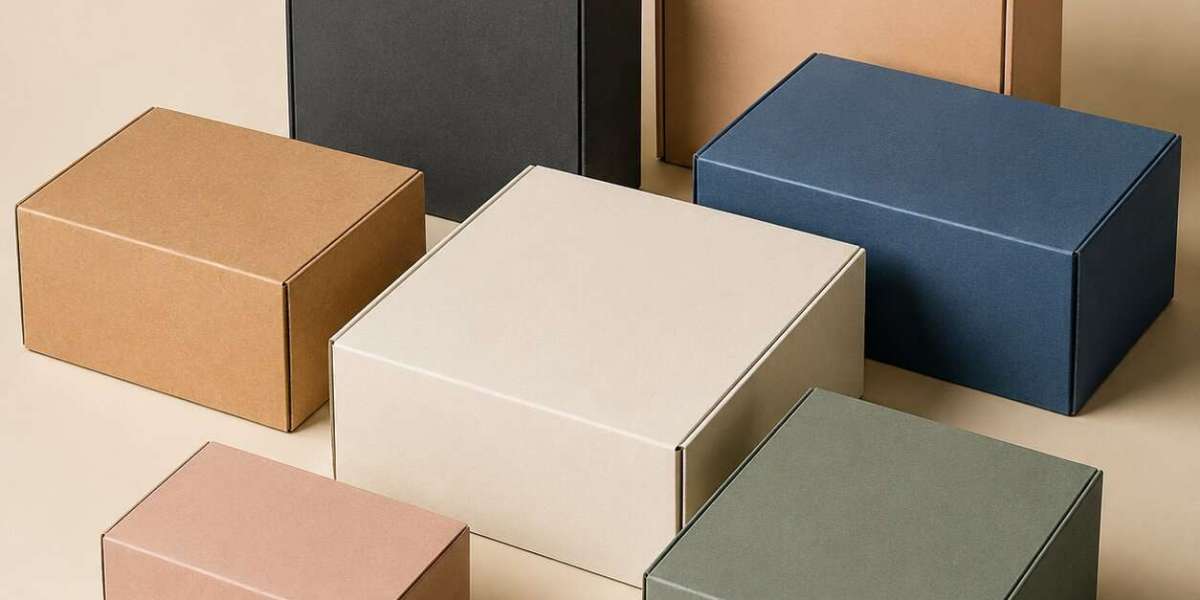
Retail packaging does more than hold a product. It protects items during handling, keeps them organized, and gives customers an immediate idea of what a brand stands for. Custom Retail Boxes give businesses the flexibility to create packaging around the product instead of forcing the product into a standard box.
From cosmetics and electronics to clothing accessories, food products, candles, and gift items, custom boxes can be produced in different sizes, shapes, materials, and printing styles. A well-designed box can make a product look more professional while providing the protection needed for storage, shipping, and retail display.
What Are Custom Retail Boxes?
Custom Retail Boxes are packaging boxes manufactured according to a product's specific requirements. Instead of choosing a standard stock box, businesses can select the dimensions, board material, printing, finishing, and opening style.
The box can be designed to fit the product closely, which helps reduce unnecessary movement inside the package. This is particularly useful for products that need additional support during transportation or shelf handling.
Custom retail packaging can also include brand colors, logos, product information, barcodes, instructions, and other important details.
Why Do Retail Products Need Custom Packaging?
Retail products compete for attention on shelves, counters, and online marketplaces. Packaging is often one of the first things a customer notices.
Custom packaging helps create a consistent appearance across different products. When several items from the same brand use matching box designs, customers can recognize the product range more easily.
It can also provide practical advantages. A properly sized box can help keep products secure, while suitable materials can provide protection against everyday handling, pressure, and minor impacts.
How Do Custom Retail Boxes Protect Products?
Protection starts with choosing the right box material and size. A box that's too large can allow the product to move around, while a box that's too small may place unnecessary pressure on the product.
Depending on the product, businesses can choose paperboard, corrugated board, kraft-style materials, or other suitable packaging boards.
Internal inserts can also be added where required. These may include cardboard dividers, trays, sleeves, or fitted compartments.
For fragile or premium products, the combination of a strong outer box and an appropriate internal structure can provide additional support.
What Types of Custom Retail Boxes Are Available?
Different products require different packaging structures. Common options include:
Folding Carton Boxes
Folding cartons are lightweight and practical for many retail products. They're commonly used for cosmetics, personal care items, food products, accessories, and small consumer goods.
Tuck-End Boxes
Tuck-end designs are convenient to open and close. They can be produced with different tuck configurations depending on the product and packaging requirements.
Sleeve Boxes
Sleeves can slide over another box or tray to create a layered packaging experience. They're often used when businesses want a clean and premium appearance.
Window Boxes
Window packaging includes a clear section that allows customers to see the product without opening the box. This can work well for products where appearance is an important part of the buying decision.
Rigid Retail Boxes
Rigid boxes use a stronger construction and are suitable for premium products, gift sets, electronics, cosmetics, and luxury items.
Display Boxes
Display boxes can be designed to hold products while also presenting them on a retail counter or shelf. They can be particularly useful for smaller products sold in multiples.
How Can You Customise Retail Boxes?
Almost every visible part of the packaging can be planned around the product and brand.
You can select:
- Custom dimensions
- Box structure
- Paperboard thickness
- Kraft or white board
- Printed colors
- Logo placement
- Product images
- Typography
- Window options
- Inserts and dividers
- Matte or gloss finishes
- Special coatings
- Foil details
- Embossing or debossing
The goal isn't simply to add more features. Good customization means selecting the options that make sense for the product, budget, and customer experience.
What Printing Options Can Be Used?
Printing gives the box its visual identity. Depending on the design, retail boxes can feature full-color artwork, simple one-color printing, patterns, product photography, or minimal branding.
Digital printing can be useful for smaller quantities and detailed designs. Offset printing is another option for larger production runs where consistent, high-quality results are required.
Businesses should prepare artwork at the correct dimensions and ensure that important text, logos, and product details remain clear.
Which Finish Is Best for Retail Packaging?
The best finish depends on the look and feel you want.
A matte finish provides a smooth, understated appearance and can work well for minimalist or premium packaging.
A gloss finish creates a brighter surface and can make colors appear more vibrant.
Other options include soft-touch coatings, spot finishes, foil stamping, embossing, and debossing. These features can be used selectively to highlight a logo, product name, or particular design element.
How Do Custom Retail Boxes Improve Shelf Presentation?
Packaging plays an important role in how products appear together on a shelf. Consistent box sizes, colors, and branding can create a more organized product range.
A well-designed retail box can also make important information easy to find. Customers may want to see the product name, quantity, ingredients, instructions, features, or other relevant details before making a purchase.
Clear hierarchy is important. The product name should be easy to identify, while secondary information can be positioned around it without making the package look crowded.
What Information Should You Put on Retail Boxes?
The information depends on the product and applicable requirements, but packaging commonly includes:
- Brand name
- Product name
- Product description
- Quantity or size
- Ingredients where applicable
- Usage instructions
- Care information
- Barcode
- Website or contact details
- Manufacturing information where required
- Relevant warnings or compliance information
Always check the specific labeling requirements that apply to your product and market before printing packaging in bulk.
How Do You Choose the Right Box Size?
Start with the product's actual measurements. Measure its length, width, and height, including any components that need to remain inside the package.
Then consider whether the product needs an insert, protective layer, sleeve, or additional internal space.
Avoid choosing a box simply because it's inexpensive. The wrong dimensions can result in poor presentation, excess material, product movement, or difficulty closing the package.
A packaging supplier can also help determine the appropriate dimensions based on the product and box structure.
Are Custom Retail Boxes Suitable for Small Businesses?
Yes. Custom packaging isn't limited to large retailers. Small businesses, startups, online stores, handmade brands, and independent retailers can also use customized boxes.
Ordering the right quantity is important for keeping packaging costs under control. Businesses launching a new product may prefer a smaller initial order, while established products may justify larger production runs.
Starting with a simple structure and adding premium finishing only where it adds value can also help control the overall packaging budget.
What Should You Consider Before Ordering?
Before placing an order, consider five main areas: product protection, box size, material, design, and quantity.
First, determine how the product will be stored and transported. Next, select dimensions that provide a secure fit. Then choose a material that matches the product's weight and handling requirements.
Your artwork should be checked carefully before production. Review colors, spelling, measurements, barcodes, and required product information.
Finally, order a sample or prototype when possible. Seeing the physical box can help identify sizing or design issues before a larger production run.
Where Can You Order Custom Retail Boxes?
A reliable packaging supplier should be able to provide customized dimensions, suitable materials, printing options, finishing choices, and production quantities.
Fast Custom Boxes provides businesses with options for creating retail packaging around their product requirements, whether they need straightforward folding cartons or more detailed branded packaging.
The right packaging should balance appearance, protection, functionality, and cost. When these elements work together, your retail box becomes a useful part of the overall product experience rather than simply an outer container.
Final Thoughts
Custom Retail Boxes give businesses more control over how products are protected, presented, and packaged. From choosing the correct dimensions to selecting materials, printing, finishes, and box styles, every element can be adjusted to suit the product.
Whether you're launching a new item or updating an existing product range, thoughtful retail packaging can create a cleaner presentation and a more consistent customer experience. The key is to focus on practical requirements first and then use design features to give the packaging its own identity. Read more: Custom Boxes in uk