Vitiligo Treatment Market Emerging Opportunities and Industry Trends
Vitiligo Treatment Market to Reach USD 2.97 Billion by 2034, Driven by Advances in Dermatology and Targeted Therapies
Market Overview
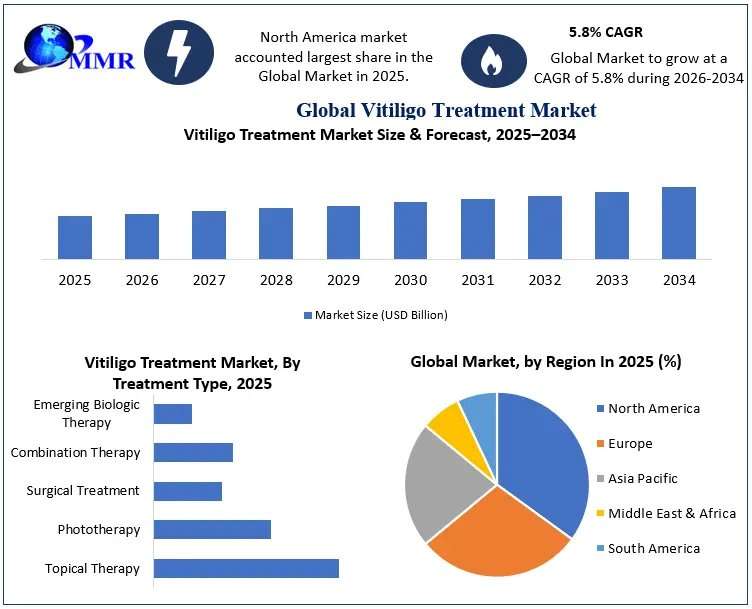
The Vitiligo Treatment Market was valued at USD 1.79 billion in 2025 and is projected to reach USD 2.97 billion by 2034, expanding at a compound annual growth rate (CAGR) of 5.8% from 2026 to 2034. The market is gaining momentum as awareness of vitiligo increases, dermatological care advances, and patients seek effective treatments to manage skin depigmentation. Growing investments in pharmaceutical research, improved diagnostic practices, and the development of targeted therapies are creating new opportunities for manufacturers and healthcare providers.
Vitiligo is a chronic skin condition characterized by the loss of melanocytes, the cells responsible for producing skin pigment. Although it is not contagious, the condition can significantly affect patients' emotional well-being and quality of life. Increasing recognition of its psychological and social impact is encouraging earlier diagnosis, better access to dermatological consultations, and greater demand for personalized treatment options.
Market Estimation, Growth Drivers, and Opportunities
The Vitiligo Treatment Market is expected to grow steadily throughout the forecast period, supported by advances in topical medications, phototherapy, and systemic treatment approaches. The increasing prevalence of autoimmune disorders, rising awareness of skin health, and growing acceptance of professional dermatological care are contributing to market expansion.
One of the major growth drivers is the development of targeted medicines that address inflammatory pathways involved in vitiligo. Treatments designed to inhibit Janus kinase (JAK) signaling have attracted particular attention because these pathways play a role in the immune mechanisms associated with melanocyte loss. The introduction of topical ruxolitinib for nonsegmental vitiligo has strengthened interest in prescription-based treatment options.
Phototherapy, particularly narrowband ultraviolet B (NB-UV, continues to play an important role in clinical management. Combining appropriate medical treatment with phototherapy may help selected patients achieve repigmentation. However, treatment response varies according to disease characteristics, affected body areas, and individual patient factors.
Significant opportunities exist in developing treatments with improved efficacy, convenient application, and better long-term disease management. Pharmaceutical companies can also benefit from expanding clinical research, combination therapies, patient-support programs, and improved access to specialist care. Emerging research into immune modulation and melanocyte regeneration may further broaden future treatment possibilities.
Receive a Free Sample Copy Instantly : https://www.maximizemarketrese....arch.com/request-sam
United States Market: Latest Trends and Investment
The United States remains an important market for vitiligo treatment because of its advanced healthcare infrastructure, established pharmaceutical industry, and access to specialized dermatology services. A notable development in 2025 was continued commercial and clinical interest in topical ruxolitinib cream, marketed as Opzelura, following its earlier US approval for nonsegmental vitiligo in patients aged 12 years and older.
 Like
Like
-

-

-

-

-

-

Comment
Share
Vitiligo Treatment Market Emerging Opportunities and Industry Trends
Vitiligo Treatment Market to Reach USD 2.97 Billion by 2034, Driven by Advances in Dermatology and Targeted Therapies
Market Overview
The Vitiligo Treatment Market was valued at USD 1.79 billion in 2025 and is projected to reach USD 2.97 billion by 2034, expanding at a compound annual growth rate (CAGR) of 5.8% from 2026 to 2034. The market is gaining momentum as awareness of vitiligo increases, dermatological care advances, and patients seek effective treatments to manage skin depigmentation. Growing investments in pharmaceutical research, improved diagnostic practices, and the development of targeted therapies are creating new opportunities for manufacturers and healthcare providers.
Vitiligo is a chronic skin condition characterized by the loss of melanocytes, the cells responsible for producing skin pigment. Although it is not contagious, the condition can significantly affect patients' emotional well-being and quality of life. Increasing recognition of its psychological and social impact is encouraging earlier diagnosis, better access to dermatological consultations, and greater demand for personalized treatment options.
Market Estimation, Growth Drivers, and Opportunities
The Vitiligo Treatment Market is expected to grow steadily throughout the forecast period, supported by advances in topical medications, phototherapy, and systemic treatment approaches. The increasing prevalence of autoimmune disorders, rising awareness of skin health, and growing acceptance of professional dermatological care are contributing to market expansion.
One of the major growth drivers is the development of targeted medicines that address inflammatory pathways involved in vitiligo. Treatments designed to inhibit Janus kinase (JAK) signaling have attracted particular attention because these pathways play a role in the immune mechanisms associated with melanocyte loss. The introduction of topical ruxolitinib for nonsegmental vitiligo has strengthened interest in prescription-based treatment options.
Phototherapy, particularly narrowband ultraviolet B (NB-UV, continues to play an important role in clinical management. Combining appropriate medical treatment with phototherapy may help selected patients achieve repigmentation. However, treatment response varies according to disease characteristics, affected body areas, and individual patient factors.
Significant opportunities exist in developing treatments with improved efficacy, convenient application, and better long-term disease management. Pharmaceutical companies can also benefit from expanding clinical research, combination therapies, patient-support programs, and improved access to specialist care. Emerging research into immune modulation and melanocyte regeneration may further broaden future treatment possibilities.
Receive a Free Sample Copy Instantly : https://www.maximizemarketrese....arch.com/request-sam
United States Market: Latest Trends and Investment
The United States remains an important market for vitiligo treatment because of its advanced healthcare infrastructure, established pharmaceutical industry, and access to specialized dermatology services. A notable development in 2025 was continued commercial and clinical interest in topical ruxolitinib cream, marketed as Opzelura, following its earlier US approval for nonsegmental vitiligo in patients aged 12 years and older.