Propylene Oxide Market Size, Share, Demand, and Industry Overview
Global Propylene Oxide Market to Reach USD 36.04 Billion by 2034, Driven by Polyurethane, EV and Sustainable Production Demand
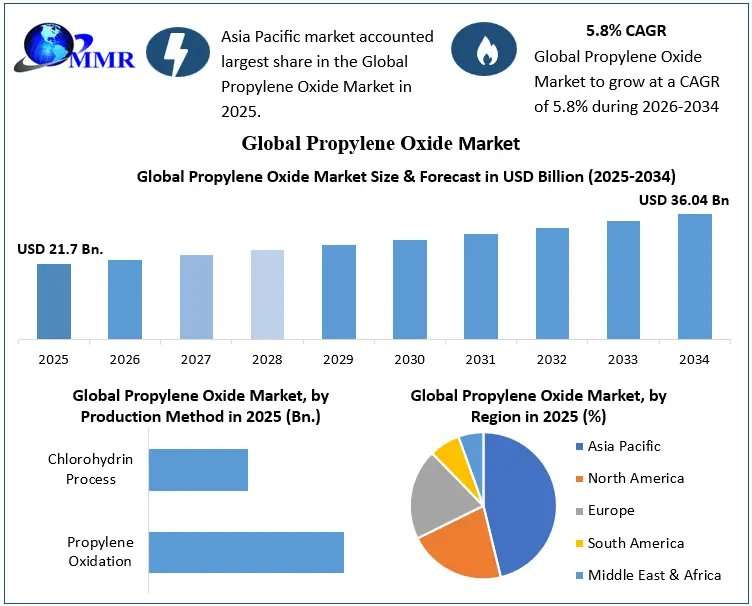
The Propylene Oxide Market was valued at USD 21.7 billion in 2025 and is projected to reach USD 36.04 billion by 2034, expanding at a CAGR of 5.8% during 2026–2034. Propylene oxide is a critical chemical intermediate used to manufacture polyether polyols, propylene glycol, glycol ethers and specialty surfactants. Increasing demand for polyurethane foams across automotive, construction, furniture, insulation and packaging is strengthening consumption, while electric vehicle production is creating new opportunities for polyurethane-based battery encapsulation, thermal management, adhesives and interior applications.
Market Estimation, Growth Drivers and Opportunities
The market outlook is supported by industrialization, urbanization and rising demand for lightweight, energy-efficient materials. Automotive manufacturers use polyurethane-derived materials for seating, insulation, vibration damping and interiors, while electric vehicles create additional demand for polyurethane-based battery thermal management and encapsulation. Construction is another major growth engine because rigid polyurethane foams support building insulation and energy efficiency.
Propylene glycol also expands opportunities in pharmaceuticals, food processing, cosmetics and personal care, while glycol ethers and specialty surfactants serve coatings, cleaning products and inks. Sustainable manufacturing is creating opportunities for hydrogen peroxide to propylene oxide (HPPO) technology. However, volatile propylene feedstock prices and higher production costs remain important challenges for producers and investors.
U.S. Market Trends and Investment
The United States remains a strategically important propylene oxide market because of its integrated petrochemical infrastructure, strong automotive and construction industries, and established polyurethane value chain. In 2025, industry activity highlighted a shift toward supply optimization and feedstock security. LyondellBasell approved an investment to expand propylene production at its Channelview Complex near Houston, with approximately 400,000 metric tons per year of additional capacity planned and startup targeted for 2028. The project is expected to strengthen propylene availability and reduce exposure to feedstock volatility, supporting downstream opportunities including propylene oxide. At the same time, Dow permanently shut down a higher-cost propylene oxide unit at Freeport, Texas, rationalizing approximately 20% of North American PO industry capacity. These developments show U.S. producers balancing capacity rationalization with targeted feedstock investment.
Request a Sample of the Full Market Report : https://www.maximizemarketrese....arch.com/request-sam
 喜欢
喜欢
-

-

-

-

-

-

评论
分享
Propylene Oxide Market Size, Share, Demand, and Industry Overview
Global Propylene Oxide Market to Reach USD 36.04 Billion by 2034, Driven by Polyurethane, EV and Sustainable Production Demand
The Propylene Oxide Market was valued at USD 21.7 billion in 2025 and is projected to reach USD 36.04 billion by 2034, expanding at a CAGR of 5.8% during 2026–2034. Propylene oxide is a critical chemical intermediate used to manufacture polyether polyols, propylene glycol, glycol ethers and specialty surfactants. Increasing demand for polyurethane foams across automotive, construction, furniture, insulation and packaging is strengthening consumption, while electric vehicle production is creating new opportunities for polyurethane-based battery encapsulation, thermal management, adhesives and interior applications.
Market Estimation, Growth Drivers and Opportunities
The market outlook is supported by industrialization, urbanization and rising demand for lightweight, energy-efficient materials. Automotive manufacturers use polyurethane-derived materials for seating, insulation, vibration damping and interiors, while electric vehicles create additional demand for polyurethane-based battery thermal management and encapsulation. Construction is another major growth engine because rigid polyurethane foams support building insulation and energy efficiency.
Propylene glycol also expands opportunities in pharmaceuticals, food processing, cosmetics and personal care, while glycol ethers and specialty surfactants serve coatings, cleaning products and inks. Sustainable manufacturing is creating opportunities for hydrogen peroxide to propylene oxide (HPPO) technology. However, volatile propylene feedstock prices and higher production costs remain important challenges for producers and investors.
U.S. Market Trends and Investment
The United States remains a strategically important propylene oxide market because of its integrated petrochemical infrastructure, strong automotive and construction industries, and established polyurethane value chain. In 2025, industry activity highlighted a shift toward supply optimization and feedstock security. LyondellBasell approved an investment to expand propylene production at its Channelview Complex near Houston, with approximately 400,000 metric tons per year of additional capacity planned and startup targeted for 2028. The project is expected to strengthen propylene availability and reduce exposure to feedstock volatility, supporting downstream opportunities including propylene oxide. At the same time, Dow permanently shut down a higher-cost propylene oxide unit at Freeport, Texas, rationalizing approximately 20% of North American PO industry capacity. These developments show U.S. producers balancing capacity rationalization with targeted feedstock investment.
Request a Sample of the Full Market Report : https://www.maximizemarketrese....arch.com/request-sam