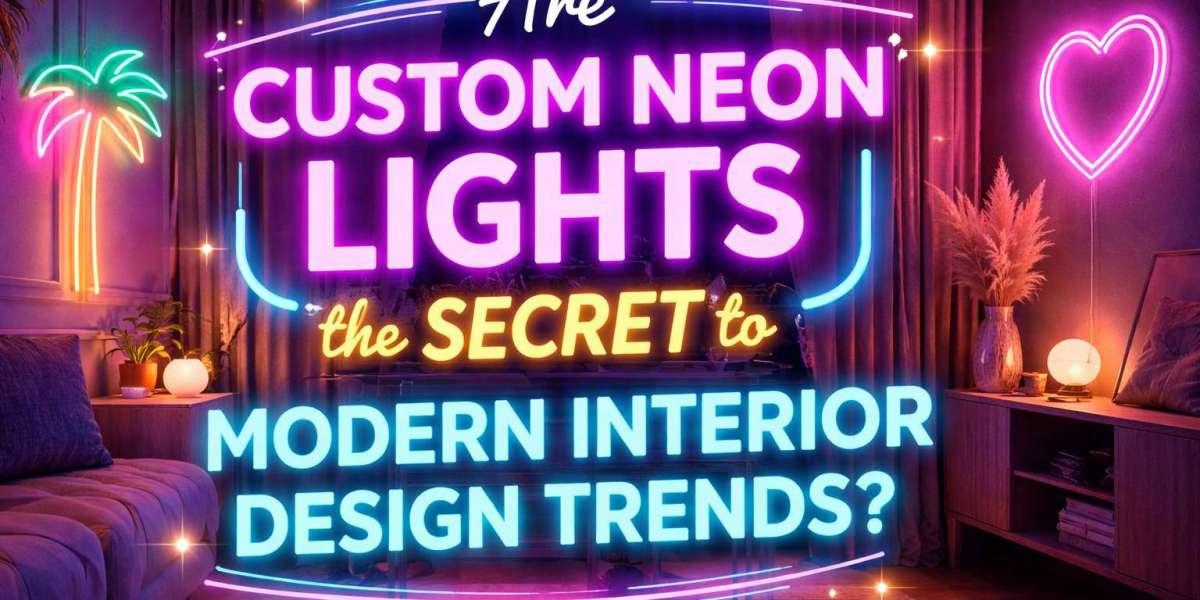
Lighting can have a strong influence on how a room looks and feels. The right lighting can make a space appear warmer, more inviting, creative, or modern. While traditional ceiling lights and decorative lamps remain common, Custom Neon Lights have become an interesting option for people who want lighting that also reflects their personality, interests, or style.
Unlike standard lighting products that are usually available in fixed designs, custom neon lighting allows you to choose words, names, symbols, shapes, colors, and other visual elements. This makes them suitable for bedrooms, living rooms, offices, cafés, restaurants, studios, events, and commercial spaces.
However, choosing the right neon sign is not simply about selecting a color or attractive design. Several practical factors should be considered, including size, brightness, material, mounting method, power consumption, installation, safety, and the environment where the light will be used.
This guide explains the main things to consider before choosing Custom Neon Lights, helping you make a decision based on both appearance and practical requirements.
What Are Custom Neon Lights?
Custom Neon Lights are decorative lighting products created according to a specific design or concept. Instead of purchasing a standard pre-designed sign, customers can often select personalized text, names, phrases, symbols, logos, or shapes.
Modern Neon Lights may use LED-based technology rather than traditional glass neon tubes. LED neon-style products can be lighter and more flexible in design, making them suitable for a wider variety of indoor decorative applications.
The exact construction and materials vary between manufacturers, so it is important to check the product specifications before purchasing.
1. Decide Where You Will Use the Neon Light
The first step is to determine where the sign will be installed.
Different locations require different designs and sizes.
For example, Neon Lights can be used in:
- Bedrooms
- Living rooms
- Home offices
- Gaming rooms
- Restaurants
- Cafés
- Retail stores
- Photography studios
- Wedding venues
- Event spaces
- Reception areas
A sign designed for a bedroom may have different requirements from one intended for a busy commercial environment.
Think about the wall, furniture, surrounding lighting, and viewing distance before deciding on the design.
2. Choose the Right Size
Size is one of the most important considerations when selecting Custom Neon Lights.
A sign that is too small may not have enough visual impact, while an oversized sign can dominate the room or become difficult to install.
Before ordering, measure the available wall or installation area.
Consider:
- Wall width
- Wall height
- Available clearance
- Viewing distance
- Furniture placement
- Power outlet location
If the sign is intended for a business, also consider how far customers will be from it.
The ideal size should complement the surrounding space rather than overwhelm it.
3. Think Carefully About the Design
The design is what makes custom lighting different from ordinary decorative lights.
You can consider:
- Names
- Short phrases
- Quotes
- Initials
- Symbols
- Logos
- Simple illustrations
- Shapes
When choosing text, avoid making the design unnecessarily complicated.
Shorter phrases are often easier to read, especially when the sign will be viewed from a distance.
A clean design can also remain visually appealing for longer than a design based heavily on temporary trends.
4. Select an Appropriate Font
Typography plays an important role in personalized neon signs.
Different fonts create different impressions.
For example:
- Script fonts can create an elegant appearance.
- Bold fonts can provide stronger visibility.
- Minimal fonts can suit modern interiors.
- Handwritten styles can create a more personal feeling.
- Rounded fonts may work well in playful spaces.
Before finalizing the design, check whether the selected font is easy to read when illuminated.
Decorative fonts may look attractive in a preview but become difficult to understand when converted into a glowing sign.
5. Choose the Right Color
Color can significantly affect the appearance of Neon Lights.
Different colors can create different moods and complement different interiors.
You might choose a color based on:
- Wall color
- Furniture
- Brand identity
- Room décor
- Personal preference
- Event theme
For example, a soft-colored sign may work well in a bedroom, while a brighter color may be more suitable for a café, studio, or entertainment area.
If you are creating a business sign, consider whether the selected color works consistently with your existing branding.
6. Consider Brightness
Brightness should be appropriate for the environment.
A sign that is too bright can become uncomfortable in a bedroom or relaxation area. On the other hand, insufficient brightness may make the sign difficult to see in a commercial environment.
If available, look for Custom Neon Lights with adjustable brightness.
This provides greater flexibility because you can change the lighting according to the time of day and surrounding conditions.
For bedrooms and home interiors, softer brightness may be preferable. For commercial environments, visibility may be more important.
7. Check the Material and Construction
The materials used in a neon sign affect its appearance and durability.
Modern LED-based Neon Lights may use materials such as acrylic backing and flexible LED tubing.
Before purchasing, check:
- Backing material
- LED tubing quality
- Cable construction
- Mounting hardware
- Power supply
- Overall finish
A well-constructed sign should have clean edges, consistent illumination, and securely fitted components.
8. Understand Power Requirements
Before installing Custom Neon Lights, check how they are powered.
Most LED neon-style products use relatively simple electrical connections, but the exact power requirements vary between models.
Check:
- Input voltage
- Power adapter specifications
- Cable length
- Switch location
- Power consumption
- Outlet requirements
The power outlet should be conveniently located without creating exposed or tangled cables.
For permanent installations, professional assistance may be appropriate depending on the electrical setup.
9. Think About Installation
Installation requirements depend on the size and weight of the sign.
Smaller signs may be relatively easy to mount, while larger signs may require additional support.
Common installation methods can include:
- Wall mounting
- Hanging
- Stand-mounted placement
- Acrylic backing installation
Before purchasing, determine whether mounting hardware is included.
Also make sure that the wall or surface is suitable for the installation method being used.
10. Indoor or Outdoor Use?
Not every neon-style sign is suitable for outdoor installation.
If you plan to use Neon Lights outdoors, check whether the specific product has an appropriate weather-resistance or protection rating.
Outdoor environments expose lighting to:
- Moisture
- Dust
- Temperature changes
- Sunlight
- Wind
Never assume that an indoor LED neon sign can safely be used outside.
Always follow the manufacturer's intended-use specifications.
11. Consider Energy Consumption
LED-based neon-style lighting is generally designed to use less electricity than traditional incandescent decorative lighting, but actual consumption varies by product.
If you plan to keep your Custom Neon Lights switched on for several hours every day, check the product's power rating.
Energy consumption is particularly relevant for businesses where decorative lighting may operate for extended periods.
A timer or smart control system may also be useful if supported by the product.
12. Think About the Purpose of the Sign
Your purpose should influence your design.
For a bedroom, you may want a personal phrase or name.
For a gaming room, a bold symbol or short phrase may work better.
For a café or restaurant, the sign could complement the overall interior theme.
For a wedding or event, names, initials, or short celebratory phrases may be appropriate.
For a business, a logo or recognizable brand element may provide a more consistent visual identity.
The best design is one that fits naturally into the space where it will be used.
13. Compare Quality Before Price
Price is an important consideration, but it should not be the only deciding factor.
When comparing Custom Neon Lights, look at the complete product rather than focusing solely on the advertised price.
Compare:
- Materials
- Size
- LED quality
- Brightness
- Power supply
- Mounting hardware
- Warranty
- Installation
- Customer support
A low-cost product may seem attractive initially but may not provide the construction or reliability you expect.
At the same time, paying more does not automatically guarantee better quality. Compare the actual specifications and included features.
14. Check Warranty and Support
Custom lighting contains electrical components, so warranty coverage can provide useful protection.
Before purchasing, find out:
- What the warranty covers
- How long coverage lasts
- Whether the power supply is covered
- How defective components are handled
- Whether replacement parts are available
- How customer support can be contacted
These details become particularly important for larger installations or commercial applications.
15. Avoid Overcomplicated Designs
One common mistake when creating a personalized sign is trying to include too many elements.
A crowded design can reduce readability and make the sign visually confusing.
Instead, focus on one main idea.
A short phrase, simple logo, name, or recognizable symbol can often create a stronger visual effect than a design containing too many words and decorative elements.
16. Match the Neon Light With Your Interior
A neon sign should complement the surrounding décor.
Consider the relationship between the sign and:
- Wall color
- Furniture
- Curtains
- Flooring
- Artwork
- Other lighting
For a minimalist interior, a simple sign may work well.
For a colorful entertainment space, a brighter and more expressive design may be appropriate.
The goal is to make the lighting feel like part of the room rather than an unrelated decoration.
Maintenance Tips for Neon Lights
Modern LED-based Neon Lights generally require relatively simple maintenance.
To keep them looking good:
- Dust the surface regularly.
- Use a soft, dry or slightly damp cloth when appropriate.
- Follow the manufacturer's cleaning instructions.
- Keep electrical connections away from moisture unless specifically designed for outdoor use.
- Avoid pulling or bending the tubing unnecessarily.
- Check cables periodically for visible damage.
Always switch off and disconnect the light before performing cleaning or maintenance.
Final Checklist Before Choosing Custom Neon Lights
Before placing your order, check:
Intended location
Available wall space
Sign dimensions
Design
Font
Color
Brightness
Material
Power requirements
Installation method
Indoor or outdoor suitability
Energy consumption
Warranty
Customer support
Overall cost
This checklist can help you make a more practical decision.
Conclusion
Choosing Custom Neon Lights is about more than finding an attractive glowing design. The right sign should match the space, serve its intended purpose, provide suitable visibility, and be practical to install and maintain.
Start by deciding where the light will be used and how much space is available. Then consider the design, font, color, brightness, materials, power requirements, and installation method. If the sign will be used outdoors, make sure it is specifically designed for outdoor conditions.
When comparing Neon Lights, look beyond price and consider construction quality, warranty, power requirements, and long-term usability. A simple, well-designed sign can remain attractive for years and work naturally with the surrounding interior.
Ultimately, the best Custom Neon Lights are those that balance personal style with practical considerations. Whether you are decorating a bedroom, creating an entertaining home space, adding character to a business, or preparing for a special event, thoughtful planning can help you choose a neon design that feels appropriate, readable, and visually appealing.